Reconditionnement et refit d’un voilier traditionnel d’exception en Belgique
A new chapter for this traditional 1972 Camper & Nicholson sailboat
This Camper & Nicholson 32 is entering a new phase in its history.
This refit project is being carried out in Belgium, in collaboration with Stefan Vennekens.
It utilizes our remote refitting method: 3R — Rethink. Rebuild. Refit.
The objective is clear.
To preserve the soul of this traditional sailboat while integrating contemporary technical solutions.
The Camper & Nicholson 32: a benchmark of the traditional sailboat
The Camper & Nicholson 32 remains an icon of classic yachting.
Designed by Camper & Nicholson and Halmatic, this traditional sailing yacht is renowned for its exceptional robustness.
Its long-keel hull was a benchmark at the time in terms of stability, safety, and comfort at sea.
For over fifty years, this yacht has gracefully crossed oceans.
It continues to captivate those passionate about offshore sailing and maritime tradition.
Thus, this sailing yacht maintains its reputation as one of the most respected classic vessels in the world.
Design and refit: preserving the soul of the traditional sailboat
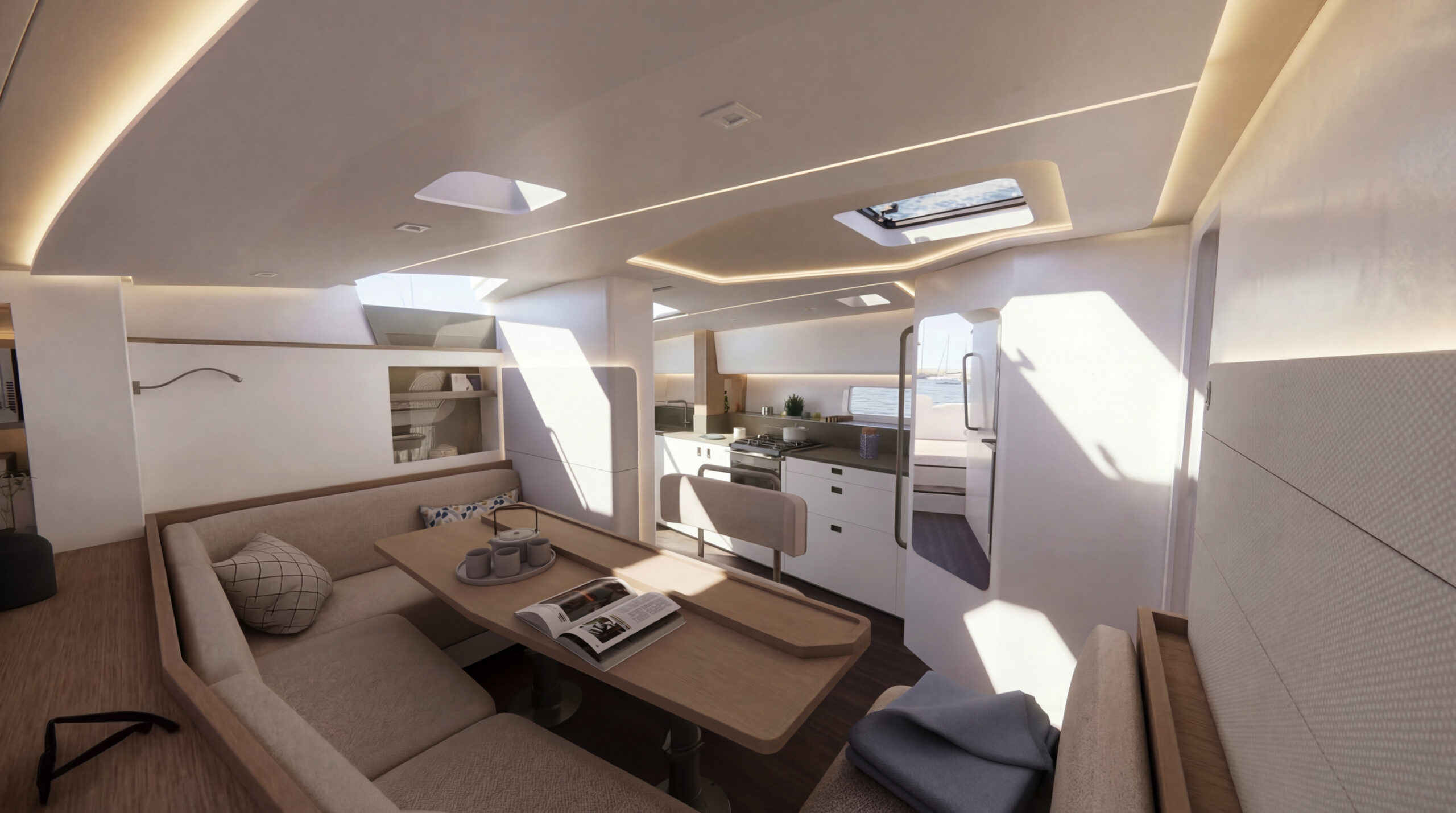
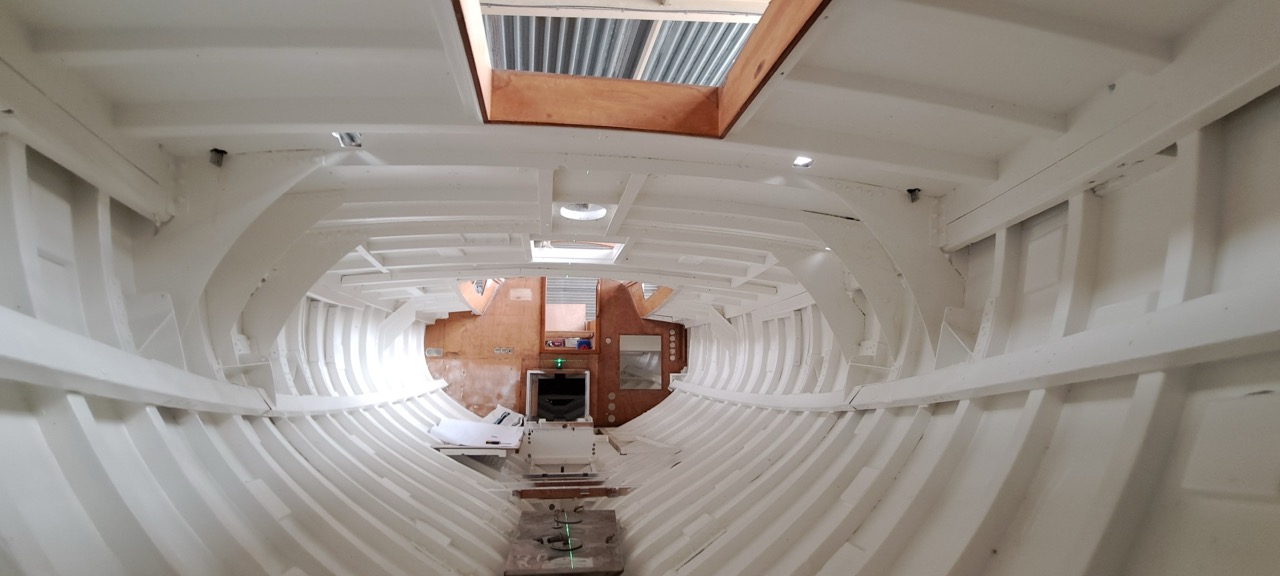
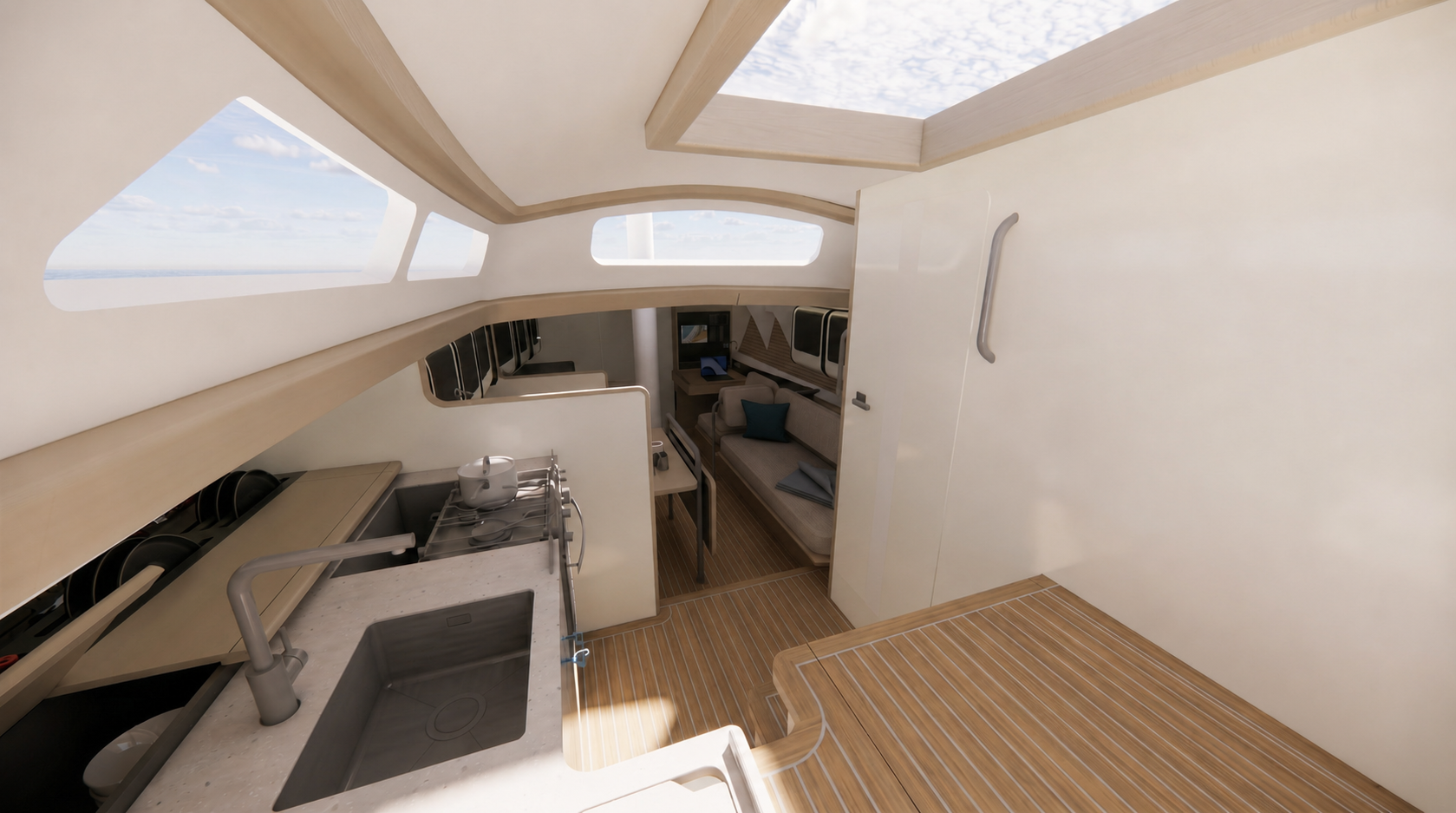
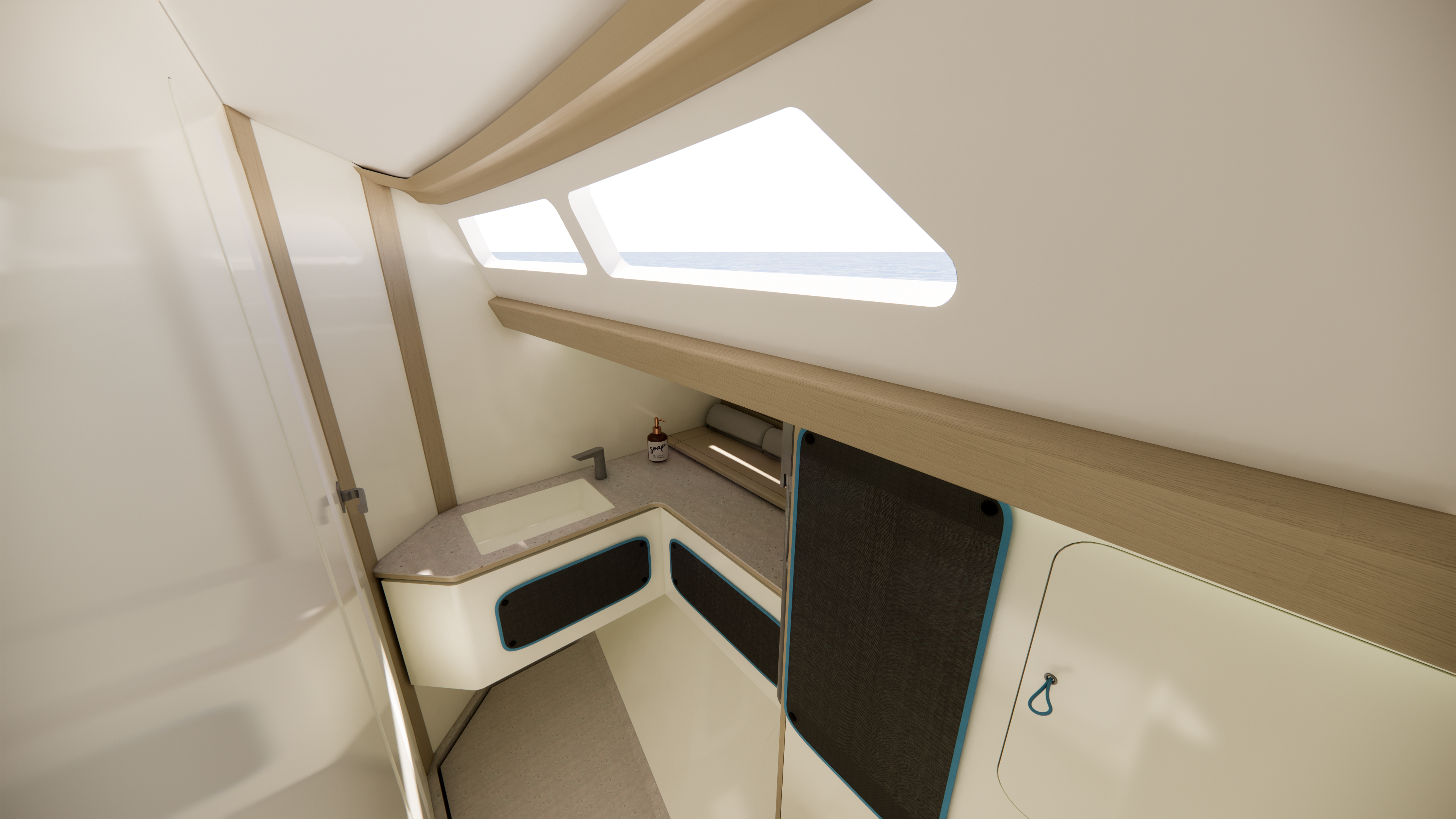
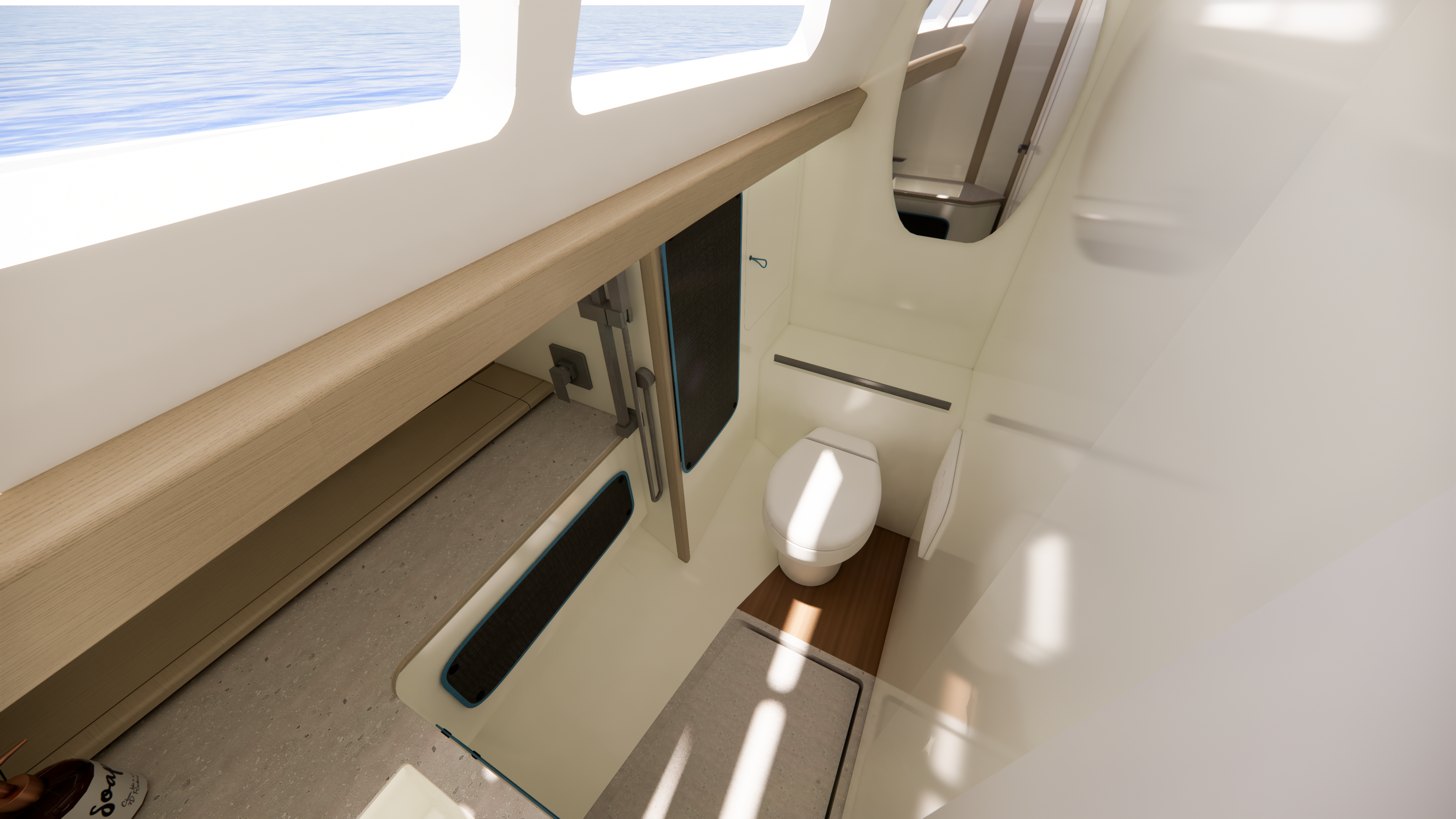
An interior redesigned with elegance and visual lightness
This refit project is based on this subtle balance as well as on the principle of “form to fonction”.
From the very first fittings, the lines of the furniture interact with the architecture of the boat.
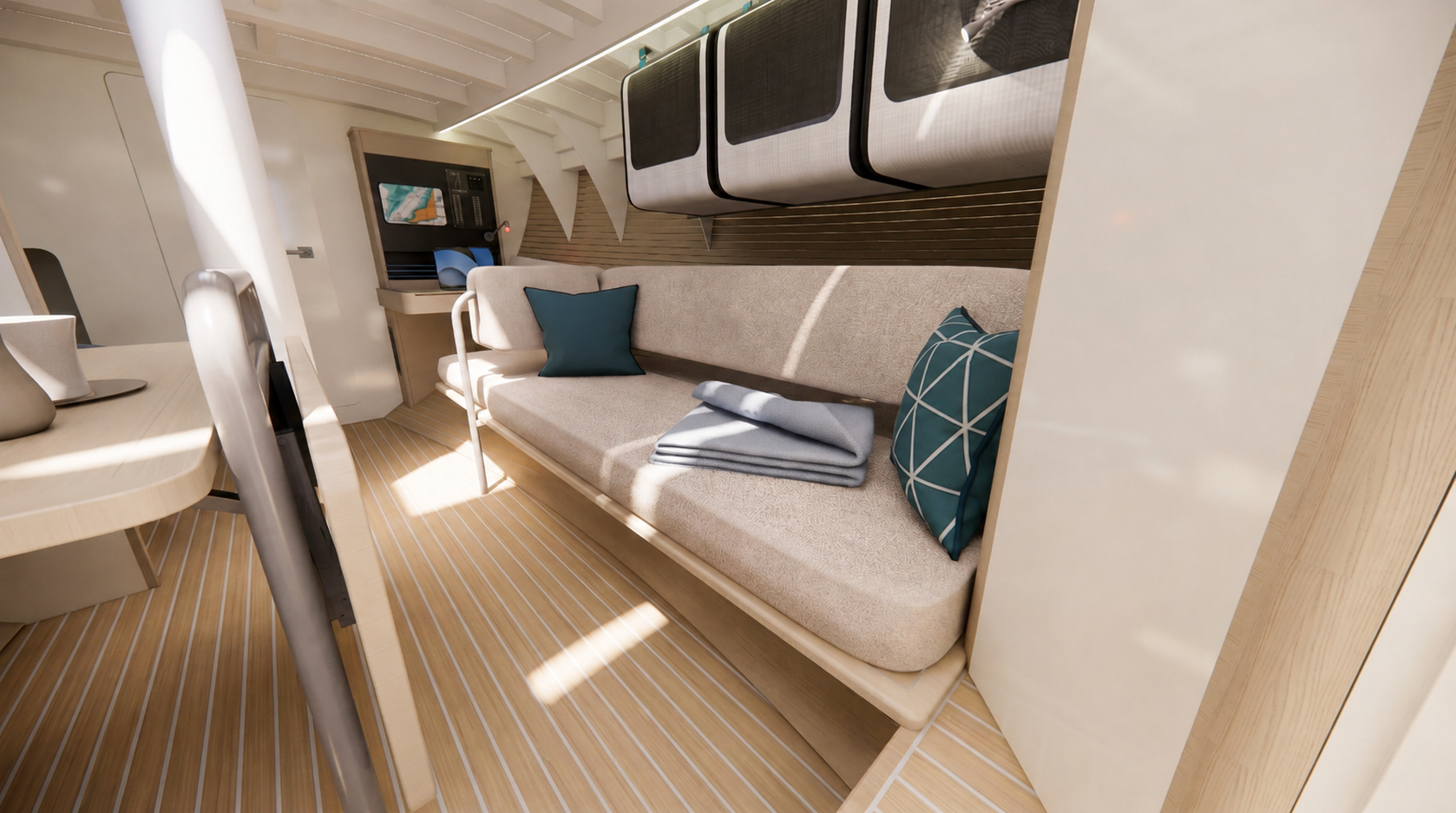
Thus, the benches with their clean design visually give the impression of a wider floor, reinforcing the feeling of space and revealing the smooth shapes of an elegant hull.
Instead of traditional tall furniture, suspended textile storage units reveal the massive structure of the deck beams.
These elements blend naturally into a Nordic and traditional atmosphere.
In this context, the weight of the improvements has naturally been reduced.
Restoring a traditional sailboat without altering its character
Respecting the identity of the boat was an absolute priority.
Each intervention was intended to extend the history of the sailboat without erasing it.
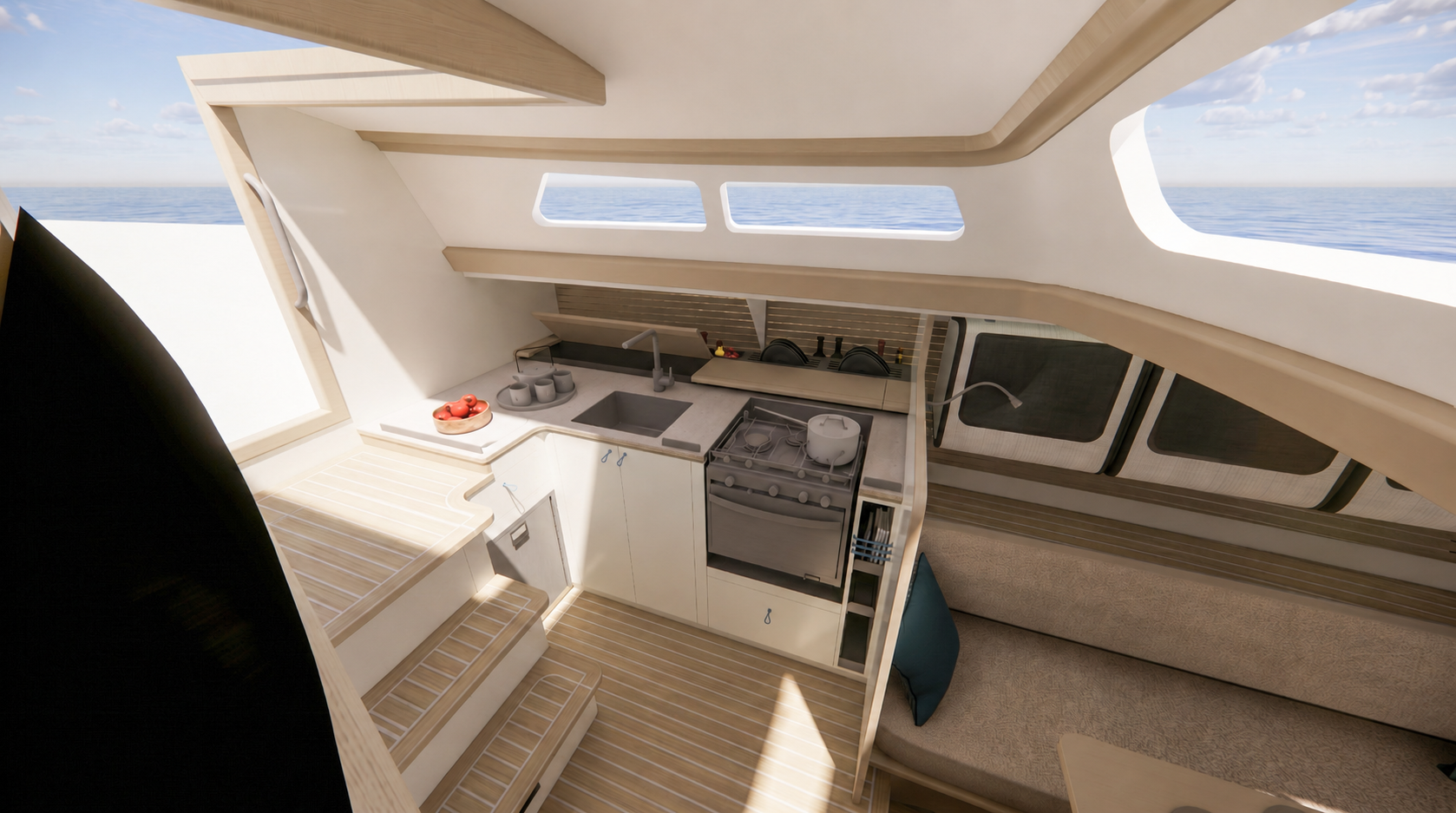
The interior design thus highlights the exposed solid wood.
The curves of the wood edge strips are reminiscent of the organic shapes of the shell.
The grooved flooring is made of solid Iroko in our workshops.
Its assembly method is directly inspired by traditional teak decks.
In addition, light shades were selected to bring more brightness.
This approach modernizes the space while preserving its authentic character.
The original openings have been preserved.
So we worked on integrating soft and warm indirect lighting.
Remote Reconditioning: An International Approach to Refitting
A Precise and Innovative Methodology
Each project begins with a full strip-out of the sailboat.
A 3D scan is then performed directly on board.
This technology provides an extremely precise survey of the existing spaces.
The data obtained allows for the remote design of all the interior layouts.
The systems and furnishings then follow our manufacturing standards.
This standardization offers several advantages.
In particular, it facilitates future maintenance and equipment replacement.
All components are archived in a secure digital library.
This approach is directly inspired by methods used in the automotive industry.
More than 50 years of sailing and a new lease of life
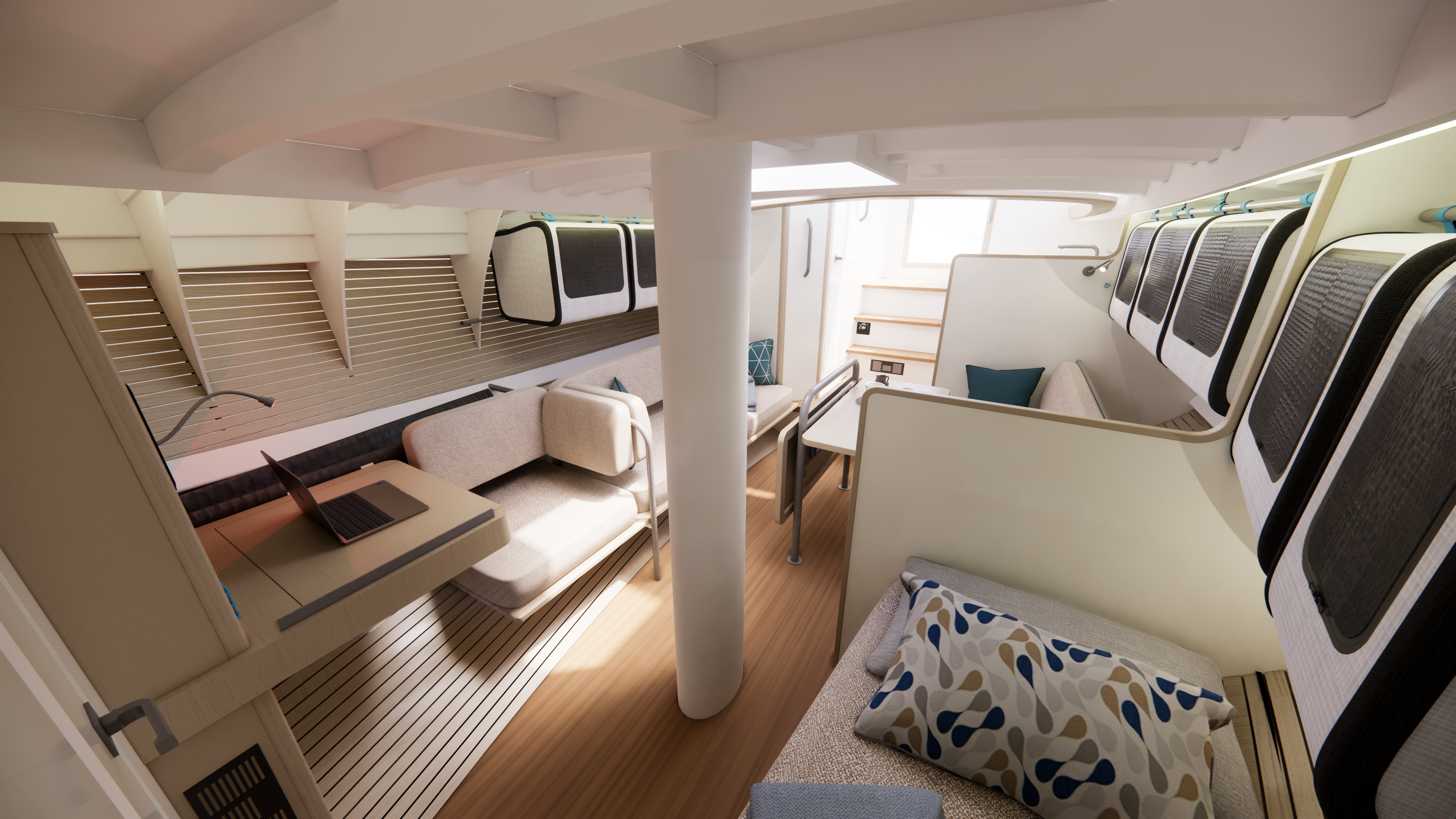
This refit also reveals the sailboat’s historical structure.
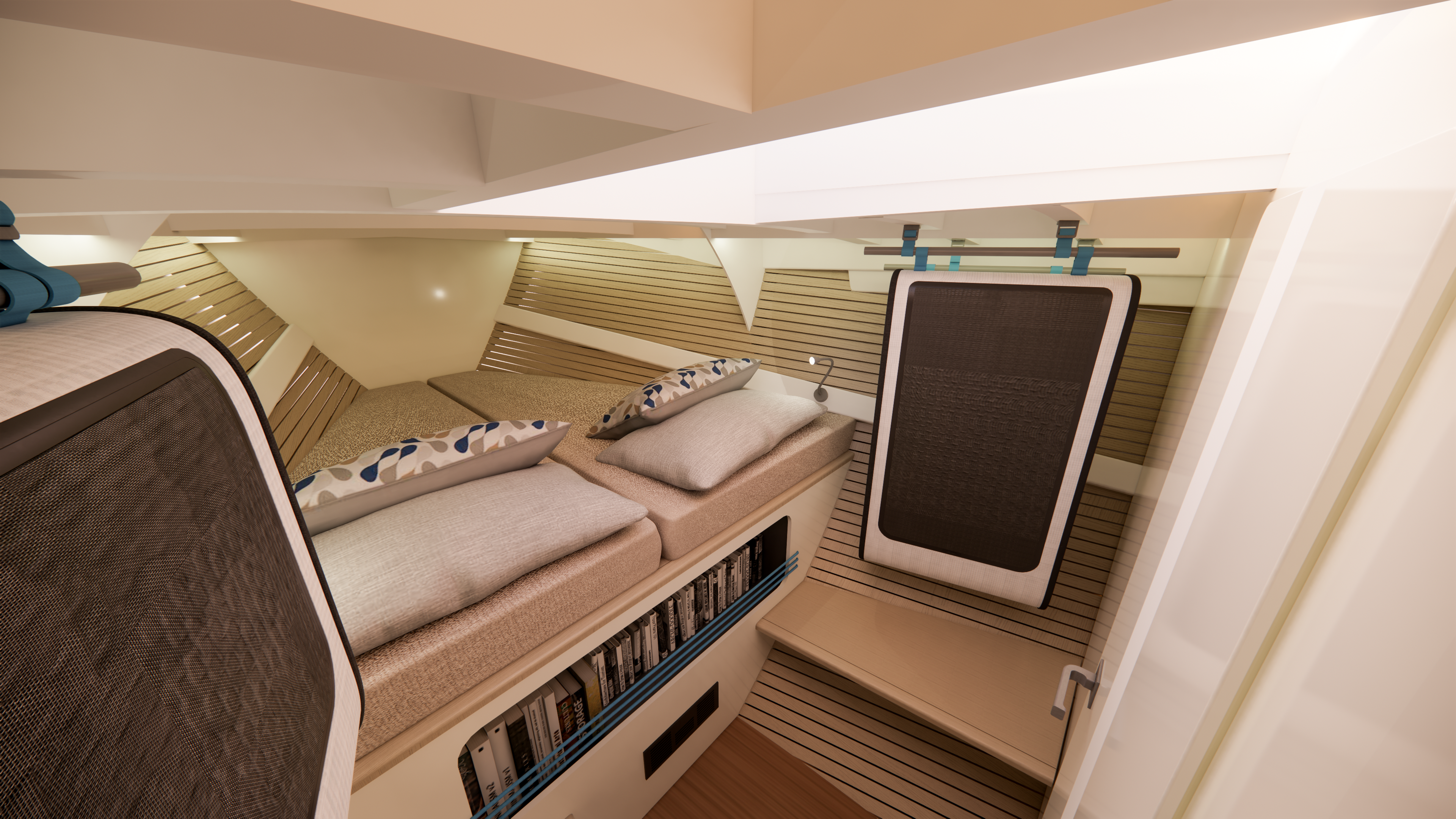
The boat’s skeleton remains intentionally visible.
Openwork solid wood battens clad the existing frames.
The white lacquer then accentuates the effects of depth and light.
This interplay between tradition and innovation defines the project’s identity.
The boat thus retains its unique character.
A production tailored to international projects
The design files then allow for the launch of manufacturing.
Production can take place in our workshops or near the vessel.
Our international network of partners supports this process.
It is currently expanding with each refit and refurbishment project.
For this type of project, we provide pre-machined components ready for assembly, along with a comprehensive assembly and installation guide.
This protocol guarantees consistent quality on every project.
Furthermore, it incorporates current standards as well as international navigation requirements.
Technical innovation for the traditional sailboat
Composite materials to lighten the refit
In a traditional sailboat, wood remains ubiquitous.
However, its density significantly increases the weight of the fittings.
Our approach, therefore, is to preserve the aesthetic appeal of wood without its structural constraints.
For enhanced performance, an innovative composite panel option is also available. These materials combine technical foam, fiberglass, and a real wood finish. The result is a significant reduction in onboard weight. This technology also improves the sailboat’s overall performance. Finally, it optimizes the comfort and durability of the fittings.
Flexibility, performance and agility
Our range of panels meets every specific refit need.
Rigidity, density, and finish vary depending on the application.
These solutions are suitable for partitions, ceilings, and furniture.
They are also suitable for floors, doors, and technical seating.
Each panel has specific mechanical, thermal, and acoustic properties.
This flexibility allows for the optimization of every space on board.
Thus, every refit project becomes entirely customized.
The sailboat then perfectly adapts to its owner’s sailing program.
Discover the evolution of this exceptional refit
The refit of this Camper and Nicholson 32 is currently underway in Belgium.
Each step reveals a little more of the potential of this unique traditional sailboat.
Want to follow the project’s progress?
Subscribe to our newsletter to discover the shipyard’s latest developments.